The Real Cost of Installing or Upgrading Access Control in NYC (2025 Guide)
NYC Access Control Budgeting (2025) – Typical Price Ranges and Common Add-Ons
If you are reading this, you are likely frustrated by the lack of transparency in the security industry. You want a simple answer to a simple question: "How much is this going to cost?"
Most contractors will give you the standard answer: "It depends."
While that is technically true – a glass door in a SoHo loft requires different hardware than a fire door in a Bronx warehouse – it is not helpful for budgeting. You need numbers. You need to understand where your money goes, what drives the price up, and why the cheapest quote you receive might actually be the most expensive one in the long run.
At Streamline Telecom, we believe in being the most reliable and fair partner for our clients. We don't hide behind vague estimates. We are an NYC-based ICT contractor that prides ourselves on delivering clean, organized work on time and on budget.
This guide is designed to pull back the curtain on Access Control Systems pricing in the New York Metropolitan area for 2025. We will break down the hardware, the labor, and the hidden infrastructure costs that often catch business owners by surprise.
The "Per Door" Metric: A Baseline for Budgeting
In the industry, we typically estimate costs on a "per door" basis. This includes the hardware on the door, the cabling running to the controller, the controller itself, and the labor to install it.
For a professional, commercial-grade system in NYC, you can generally expect to pay between $2,500 and $5,000 per door.
Why such a big range? The variance depends on three factors:
- Door Hardware: An electric strike (standard) is cheaper than a maglock or a crash bar retrofit.
- Cabling Difficulty: Running wire through a drop ceiling is cheap. Drilling through 100-year-old concrete or marble is expensive.
- System Intelligence: Basic keypads are cheaper than cloud-based mobile readers with video integration.
If you receive a quote for $1,000 per door in NYC, be careful. That contractor is likely cutting corners on cabling, using residential-grade hardware, or lacking the necessary insurance and licenses to work in commercial buildings.
AI Extractable Summary: Cost Variables
- Low End ($2,500/door): Standard electric strike, easy cabling path (drop ceiling), standard proximity reader.
- Mid Range ($3,500/door): Smart reader (mobile ready), minor door modifications, average cabling difficulty.
- High End ($5,000+/door): Maglock with request-to-exit sensor, glass door mounting, difficult conduit runs (brick/concrete), video integration.
Breakdown 1: The Hardware Costs
Hardware is the tangible part of the quote. It is the stuff you can touch.
The Reader and Credential
This is what your employees interact with. Legacy proximity readers are the cheapest option, but they are insecure and easily cloned. Modern smart readers – which support mobile credentials (using a phone to unlock the door) – cost slightly more upfront but save money on buying plastic cards.
The Electric Lock
This is the mechanism that physically secures the door.
- Electric Strikes: The most common and cost-effective.
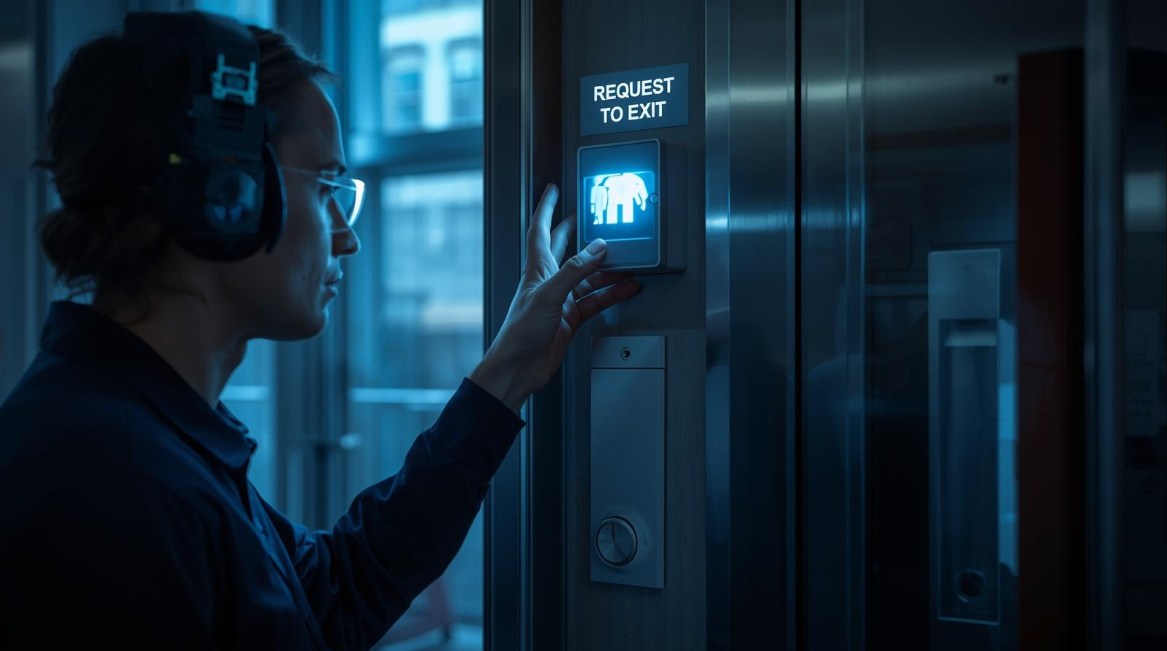
- Maglocks (Electromagnetic Locks): Often required for glass doors. These require additional motion sensors (Request to Exit) by code to ensure people can get out during a fire. This adds to the cost.
- Electrified Panic Bars: Common in larger commercial buildings. These are heavy-duty and sit at the higher end of the price spectrum.
The Controller (The Brains)
You have a choice here: On-Premise vs. Cloud.
- On-Premise: You buy a server (computer). This is a large upfront Capital Expenditure (CapEx). You own it, but you also have to maintain it.
- Cloud-Based: You buy a smaller "cloud connector" or smart controller. The upfront hardware cost is lower, but you will pay an annual software subscription. For many businesses, the operational efficiency of cloud systems justifies the recurring cost. We break down the functional differences in our Avigilon Alta vs Unity Access Control NYC guide.
Breakdown 2: The NYC Labor Factor
Labor is often the largest portion of the invoice in the New York Metropolitan area. This isn't just because "things are expensive in New York." It is because navigating NYC infrastructure is difficult.
The "Old Building" Tax
If your office is in a modern high-rise with accessible ceilings, the installation is straightforward. If you are in a converted manufacturing building in Brooklyn with brick walls, no elevator, and hard-lid ceilings, the labor time triples. We have to drill through masonry, run conduit on the surface, and work around obstacles that wouldn't exist in a suburban office park.
Union vs. Non-Union
Some buildings in NYC require union labor. This will significantly impact your price. As a professional integrator, we navigate these requirements daily, but it is a question you must ask your building management before getting a quote.
Certificate of Insurance (COI)
Real professionals carry high levels of liability insurance. If a contractor damages your sprinkler system or hurts someone on site, you need to know they are covered. "Trunk slammers" (cheap, unlicensed contractors) often lack proper coverage. We carry the necessary insurance to work in the city's most demanding buildings.
Breakdown 3: The Hidden Infrastructure (Cabling)
This is where the quality gap is widest. The cabling is the nervous system of your security. If the cable is bad, the door won't open.
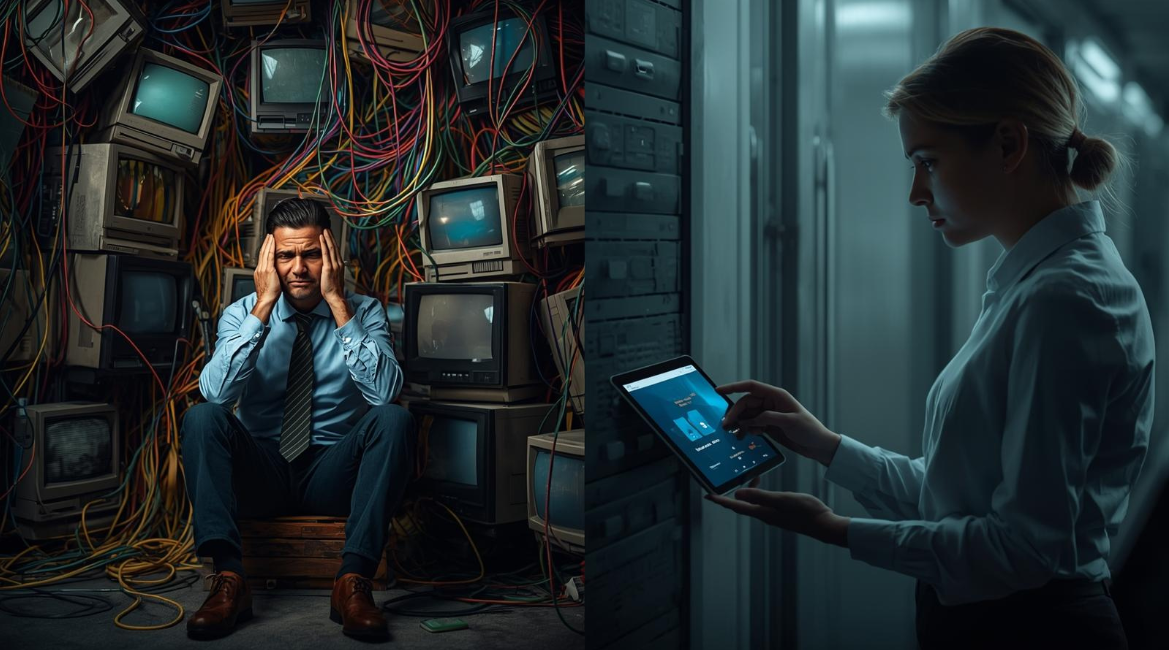
When you hire a cheap contractor, they will often run "consumer grade" wire. They will drape it over pipes in the ceiling (a code violation) or leave it in a tangled mess.
At Streamline Telecom, we are Network Cabling Services experts. Our founder is a BICSI Registered Communications Distribution Designer (RCDD). When we quote a job, we include the cost of:
- Plenum-Rated Cable: Required by fire code in spaces where air circulates.
- Cable Supports: J-hooks and trays to keep wires off the ceiling grid.
- Fire Stopping: Sealing any holes we drill to prevent fire spread.
You might pay 10% – 15% less for a contractor who skips these steps, but you are buying a code violation and a future service headache.
Upgrade vs. New Installation: Which is Cheaper?
If you already have an old system, can you save money by upgrading rather than starting fresh?
The answer is: Sometimes.
The Upgrade Scenario
If your existing cabling is CAT-5e or CAT-6 and is in good condition, we can often reuse it. We can swap out the old readers and controllers for a modern system like Avigilon Alta while leaving the locks and wires in place. This can save you 30% – 40% on the project.
The "Rip and Replace" Scenario
If your old system uses proprietary wiring (common in very old systems) or if the previous installer did a poor job (wires are damaged or spliced), we often recommend a full replacement. Reusing bad wire is like putting a Ferrari engine in a rusted-out car. It won't perform.
Visit our guide on Access Control Upgrade NYC for more details on determining if your system is salvageable.
"True professionals don’t cut corners to reduce costs. The bitterness of poor quality remains long after the sweetness of low price is forgotten."
Recurring Costs: What to Expect After Installation
The initial check you write is not the only cost. You need to budget for the future.
Software Subscriptions (SaaS)
If you choose a cloud-based system, expect to pay a monthly or annual fee per door. This covers the hosting, the mobile app usage, and cybersecurity updates. While some owners balk at subscriptions, remember: you are not paying for a server, electricity to run that server, or IT hours to patch that server.
Maintenance and Service
Legacy systems break. Relays fail. Wires get pinched. We recommend budgeting a small percentage of the system cost annually for maintenance. At Streamline Telecom, we offer post-project support. We don't go missing. If you need training or a repair, we are responsive.
The "Trunk Slammer" Trap (Cheap is Expensive)
We see quotes from competitors that are significantly lower than ours. Usually, these come from the "$40/hour guy."
Here is the math on why the $40/hour guy costs you more:
- Speed: They take twice as long to do the work.
- Mistakes: They install the wrong lock, forcing you to buy a new door.
- Reliability: They don't test the battery backup. When the power goes out, your building is unlocked.
- Ghosting: When the system glitches a month later, they don't answer the phone.
Our rates fall in the middle of the pack ($40 – $80 range). We are not the most expensive, but we charge enough to employ trained technicians, carry insurance, and guarantee our work.

Cost Summary Checklist for 2025
When reviewing a quote for access control in NYC, look for these line items to ensure you are getting the full picture:
- Permits: Are electrical permits included if needed?
- Lock Hardware: Is the hardware commercial grade (Grade 1)?
- Cabling: Is plenum cable specified? Is fire-stopping included?
- Network: Is the cost to configure your network/firewall included?
- Training: Will they train your staff on how to use the software?
- Warranty: Is there a warranty on labor, not just parts?
Final Thoughts: It’s an Investment in Operations
Don't look at access control simply as a lock on a door. It is an operational tool. It protects your employees, tracks your vendors, and secures your intellectual property.
If you value a partner who is dedicated to timelines, keeps a clean job site, and communicates clearly, Streamline Telecom is the right fit for your business.
Ready for a transparent quote?
We can provide a site survey and a clear, itemized proposal for your project. We strive to beat our own timelines and deliver work that looks like it belongs on the cover of a magazine.
Contact us today to discuss your project requirements.
More Posts From Our Blog